China is least affected by COVID among the world’s major tourism markets.
Almost every other major tourism market has been devastated – U.S., UK, France, Germany, Italy, Russia…
Chinese took 149.72 million overseas visits in 2018 (China Daily)
The China travel market with its population of nearly 1.5 billion is largely untapped, although growing fast. Currently, 120 million Chinese citizens hold passports — about ten percent of the population, compared to 40 percent of Americans and 95 percent of Brits.
52% of Chinese tourists booked through Online Travel Agencies (OTA)
Japan received 8.13 million Chinese visitors in the first 10 months of 2019, up 13.5% year on year (Japan National Tourism Organisation).
Chinese have gained a reputation as high spending tourists worldwide.
Chinese ecommerce spend by travel (Including accommodation) USD 228.5 billion
Going by current global statistics on COVID, China is likely to be the largest and most stable tourism generating market for some time, as western markets such as Europe and the United States are staggering due to the pandemic. So it may make a lot of sense to have China as the main target market, instead of scattering your marketing efforts across the world.
China at a Glance
The following factors make Digital Marketing ideal for marketers to make an impact on the China market:
72% use social media
59% are active on the Internet
Mobile penetration is 112% or 1.12 for each person in the population.
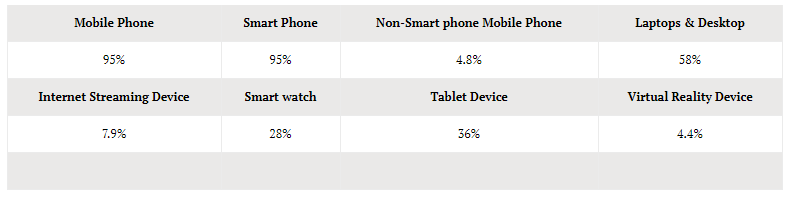
Device Ownership (Percentage of internet users age 18-64 who own each kind of device)
Mobile Actions
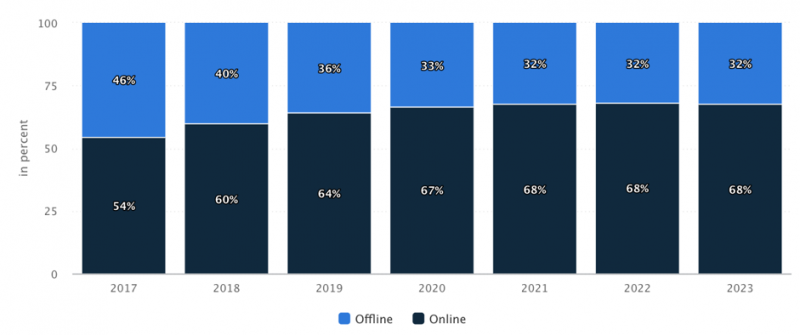
Internet connectivity
Chinese tourists sales channel
How to Digitally Market Your Country in China
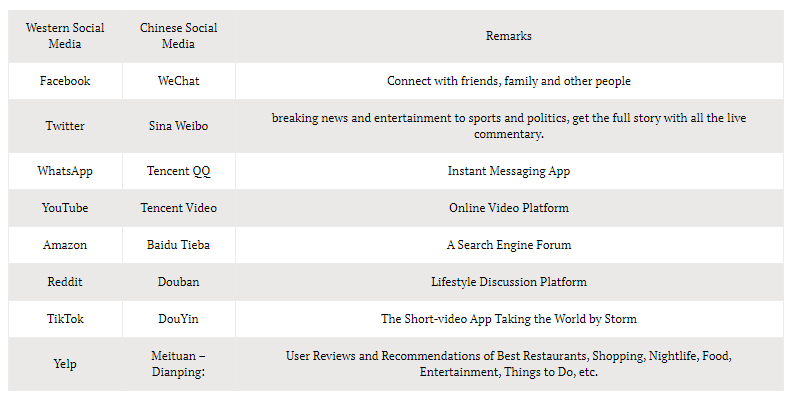
Marketers must understand that western social media sites that are most used worldwide for marketing purposes, such as Facebook, YouTube and Twitter, are prohibited in China. However, a range of additional channels are available for businesses to use in China for digital marketing.
China’s social media has enormous reach, given the size of the population and their general familiarity with technology. People in China spend a significant amount of their daily lives in social networking, especially on WeChat. It’s not just WeChat, however, that’s now one of China’s most competitive marketing channels.
Chinese equivalents of western social media
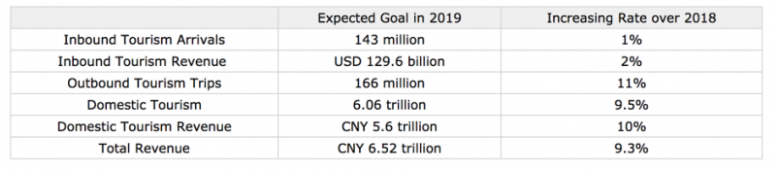
Chinese Tourism Statistics 2019
China’s Top Outbound Tourism Destinations in 2019 were Vietnam, Thailand, Japan, Indonesia, Singapore, Malaysia, Hong Kong, Philippines, Cambodia and Macau.
High Spending Tourists
The Chinese spend significantly on traveling, as personal disposable income increases every year, and China’s demand for tourism is steadily growing. It is expected that China’s overall tourism expenditures will hit $178.4 million by 2022 .
For Chinese tourists, Japan is the most attractive location all year round. Ctrip China analyzed the tour products booked by Chinese travelers and ranked the various activities they have to do. Check the first and second places for the cherry flowers and maple leaves, then enjoy the thermal springs and ski pistes. Increasing momentum also is in trying Kimonos and sushi sampling. Tourists would prefer to explore local culture and flavors and do not like sightseeing or shopping.
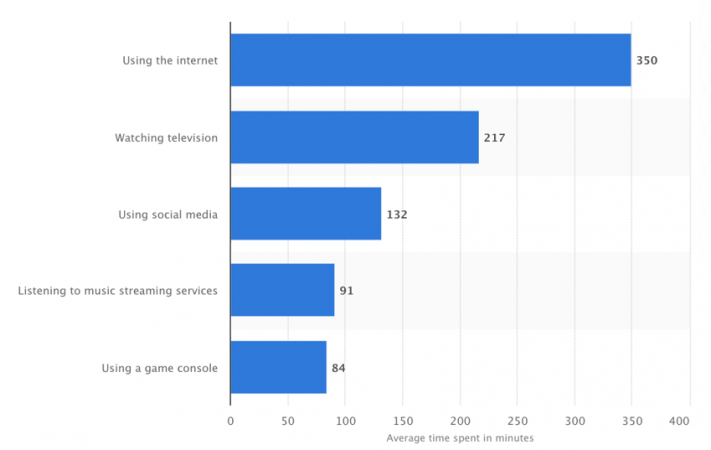
Digital Touch Points
Average daily time spent consuming and interacting with media by the internet users in China by type
Source: Statistica 3rd quarter 2019.
Social network users
Social media behaviour (Internet users age 16-64 engage with social media)
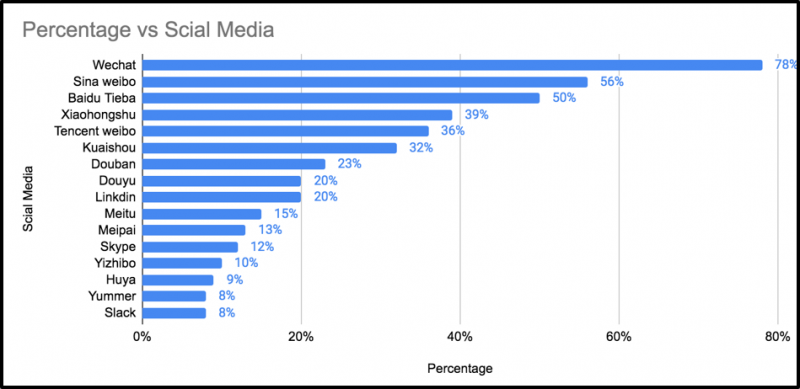
Most-used social media platforms (Jan, 2020)
(Internet users age 16-64 engage with social media)
Number of monthly active smart device users of Tencent QQ in China from 2014 to 2019 (in millions)
Source: Statistica 2020
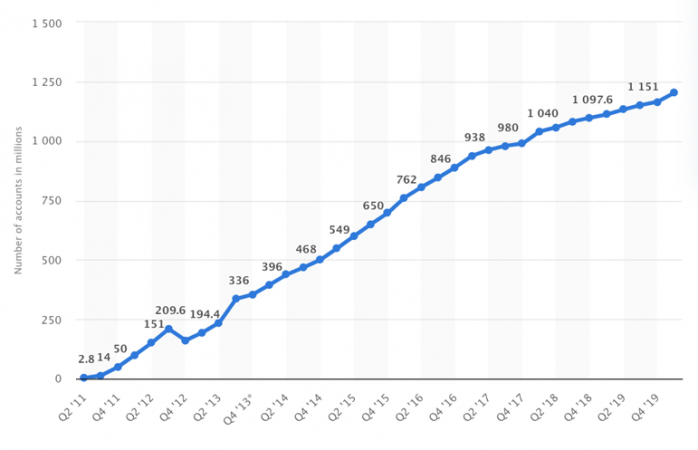
Number of monthly active WeChat users from 2nd quarter 2011 to 1st quarter 2020 (in millions)
Tencent’s active WeChat accounts have steadily increased. About 1.2 billion active monthly users from different ages were identified in Tencent WeChat in the first quarter of 2020.
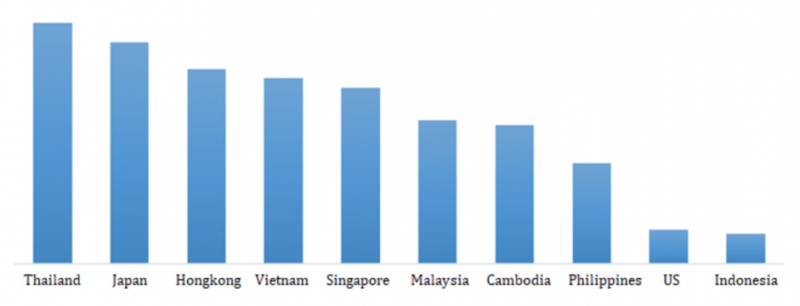
Top 10 most popular countries for Chinese tourists during Chinese New Year
Thailand, Japan, Hong Kong, Vietnam, Singapore, Cambodia, Malaysia, the Philippines, the USA and Indonesia are the 10 most popular countries for the New Year. 65% of visitors prefer short trips to Japan and south-east Asia because of their small holidays.
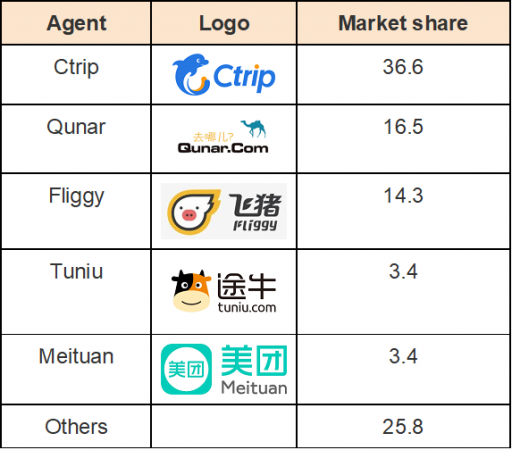
Chinese OTA (Online Travel Agency) market in 2018
Trip.com or Ctrip as it was originally known, is one of the largest Online Travel Agencies in the world. Listing 1.2 million hotels in 200 countries, it has 400 million members, with its flight booking routes connecting over 5,000 cities. It has over 45,000 employees, and a turnover of USD 5.12 billion in 2019.
Net revenue of Ctrip.com International in China (in billion yuan)
Ctrip has also branded its mobile app trip.com as a move with over 1 billion downloads. Visitors will book and follow flights on the go with the Ctrip application. The trip.com app is available in Chinese, English and seven other languages, which is partly why travelers are so popular.
Chinese FIT Travellers
As the latest data from the China Tourism Academy and Ctrip show, 31% of China’s outbound population were young and well-educated, with a predominant 27 to 37 year-old age and 77% of FIT’s hold undergraduate or university degrees. As young people, they are also very technologically savvy, particularly this FIT group, who prefer to book trips using mobile phones. As they have strong digital literacy skills, mobile phones are a big planning tool before, during and after their travel. This was also the main reason why they were more likely to change their routes while traveling. According to the Chinese Tourism Academy (CTA), 43% of the Chinese FIT’s are most likely to plan to travel for 2 weeks and 26% most likely to do so for one month, because of their spontaneous decision making.
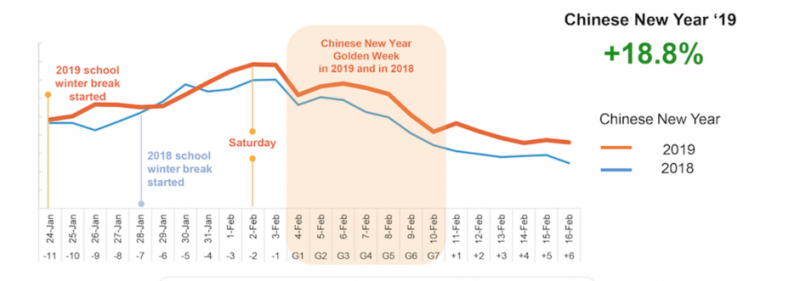
Chinese FIT outbound travel grew by 18.8% during 2019’s Chinese New Year holiday, compared to the equivalent holiday period in 2018.
Source: Forwardkeys
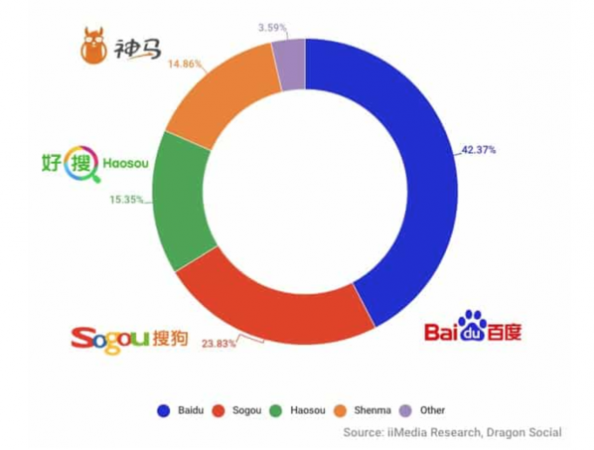
Mobile Search engine market share( 4Q 2018)
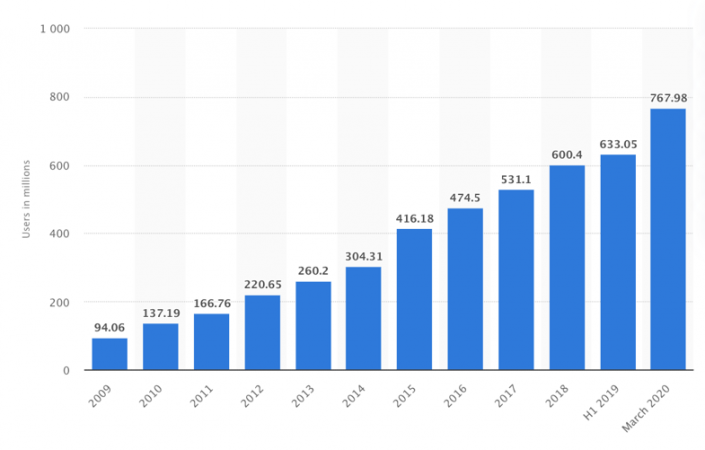
Number of online payment users in China from 2009 to March 2020
(in millions)
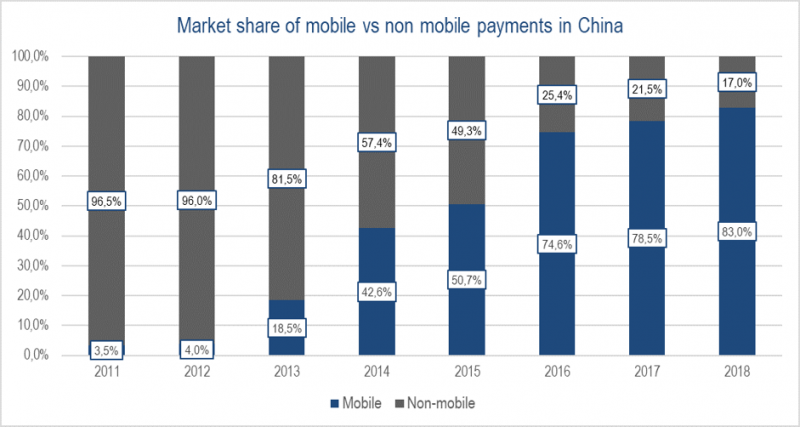
The mobile payment has been a regular practice in China for the past few years. According to a survey, the most common payment form used by 92 percent of Chinese city residents in 2018 was WeChat Pay and Alipay. In rural areas, the same phenomenon occurs: 47 percent of rural inhabitants in China use mobile payments regularly. The PBOC (People’s Bank of China), released by statistics early in 2020, indicates a 6.3-percent rise over the same period in 2018 in the amount of electronic payments processed by country’s banks. 62.1 billion electronic payments, including 30.7 billion mobile transactions, have been reported, reflecting a 73.6 percent annual increase.
Around 83% of all payments were made via mobile payment
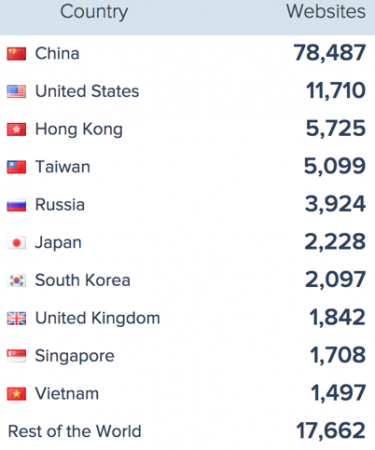
Ali pay use by websites across the globe
Lessons from Japan’s popularity among Chinese tourists
Japan has been the favored destination for Chinese family trips for comfort and health reasons. One-third of those who applied for a Japanese visa through Ctrip were traveling with their families.
The visa application for Chinese tourists has been simplified further since January 2019. The second reason is transport convenience. In winter 2019, there were 1,406 daily flights between Japan and China in the winter and a 224 rise over the summer according to estimates by the Ministry of Land, Infrastructure, Transportation and Tourism. Chinese routes comprise 27 percent of Japan’s international flight routes. Chinese cities of the second and third-tier, including Nanjing, Xi’an, Hefei, Ningbo, Haikou, Daliano, Chongqing, have been opened to new routes from Tokyo, Osaka, Nagoya and elsewhere.
Chinese tourists visiting Japan by age
Conclusion
The continuous and rapid growth of the Chinese OTA industry simultaneously increases demand, allowing companies and countries to take advantage of this huge market. This especially applies to Asian countries, the leading region for most tourists in China. Clearly, enterprises who want to tap into this wide audience will benefit from a strong online presence. A well-conceived, Chinese-friendly online marketing campaign would therefore be crucial. Ctrip continues to dominate the OTA market while new entrants and existing competitors are certain to offer a fluid tourism industry the right opportunities.
Chinese tourists are very advanced with regard to technology and prefer electronic transactions as much as possible. Thus, it is vital that tourism marketers upgrade the various aspects of their products to seamless and paperless operations. These would include payment gateways, booking engines for all aspects including air tickets-hotel bookings-attractions, mobile applications and QR codes, and ewallet.
[Dr. Nicholas Ruwan Dias is a Digital Architect at Aegon Asia, based in Kuala Lumpur. He holds a BSC in Computing from the University of Greenwich, Masters in Computer Software Engineering from Staffordshire University and PhD from the University of Malaya. He is completing a second doctorate (DBA) from Universiti Utara Malaysia.]
[Niresh Eliatamby is Chairman of Chaos Theory Ltd., a research based consultancy in Colombo, is an author, and a lecturer in HR/tourism/marketing. He holds an MBA from London Metropolitan University and LL.M. in International Business from Cardiff Metropolitan University.]
(Copyright Nicholas Ruwan Dias and Niresh Eliatamby.)